Do Private Investigators Use AirTags to Track People?
November 21, 2025 - Reading time: 17 minutes
Updated on: November 21, 2025
Apple AirTags are popular gadgets for finding lost items, but do private investigators in the UK rely on them to follow people? The short answer is no: professional investigators do not use AirTags to track individuals or vehicles. While tracking devices are indeed a common tool in surveillance, PIs prefer dedicated GPS tracking devices that are far more reliable, discreet, and legally appropriate for investigations. In this article, we will explain why AirTags are not used by private detectives, what alternatives are used instead, and how to tell if someone might be tracking you without your knowledge.
Quick Navigation:
Why Don't Private Investigators Use AirTags?
Private investigators regularly use vehicle trackers during surveillance operations, especially for cases like suspected infidelity where a spouse wants to know if their partner is really “working late” or meeting someone secretly. However, PIs do not use Apple AirTag for this purpose. The primary reason is that AirTags are designed with anti-stalking measures that will alert the person being followed. If an AirTag is placed on someone’s car or in their bag, their smartphone will soon notify them that an unknown AirTag is moving with them. On an iPhone, a notification pops up, and Android devices can detect stray AirTags as well. In short, AirTags cannot be used discreetly; they are likely to give away the surveillance to the target.
Instead of AirTags, professional investigators deploy specialised GPS tracking devices that are purpose-built for covert tracking. These devices are small black boxes, often magnetic, that can be hidden on a vehicle securely. Once in place, a GPS tracker can transmit the vehicle’s live location to an online dashboard or app, letting the investigator monitor movements in real time. Unlike an AirTag, which relies on nearby phones for location updates, a dedicated tracker uses direct GPS satellite positioning and a mobile data connection to report its location continuously. This means a PI’s tracker can provide more accurate and timely tracking information without announcing its presence.
Battery life is another factor. An AirTag uses a tiny coin-cell battery meant for months of occasional use in finding lost items. By contrast, the professional GPS trackers used by investigators have rechargeable batteries that can last one to two weeks or more of constant tracking before needing a swap or recharge. Some advanced models can even last for months in a standby mode. This longer battery life is crucial for ongoing surveillance. You would not want your tracking device dying just days into an investigation.
In summary, private detectives in the UK do use GPS trackers to follow vehicles when it is legal to do so, but they would not choose an AirTag because it is too easily discovered and not nearly as effective for investigative needs. As a leading detective agency, we fit and remove GPS trackers for clients regularly, whether to gather evidence of a cheating partner’s movements, to monitor company vehicles, or to track assets. Our GPS tracking service offers expert installation and monitoring, helping you get the information you need, discreetly and lawfully.
Who Uses AirTags to Track People?
If private investigators avoid AirTags, then who exactly is using AirTags to track people? Unfortunately, it tends to be individuals with questionable intentions or those unaware of the device’s limitations. Since Apple released the AirTag, we have seen cases of people attempting to spy on others by hiding these coin-sized trackers in cars, bags, coat pockets, and other personal items. Often it is a jealous partner or ex-partner trying to keep tabs on someone’s whereabouts. In more sinister cases, stalkers or criminals have misused AirTags to follow victims, which is why Apple implemented the alert system to begin with.
Our team of private investigators has been called in to help clients who suspected an AirTag was secretly planted on them. In one instance, we found a tracker taped inside a car’s wheel arch, wrapped in black tape to avoid detection. It had been placed there by an estranged ex who was trying to find out where the victim was going each night. The victim in that case did receive a phone alert eventually, which is how they became suspicious and contacted us.
It is important to note that while AirTags get the most press, there are many other tracking gadgets readily available online, from cheap magnetic GPS trackers to covert locator devices disguised as phone chargers. These will not trigger phone alerts like an AirTag does. If someone is determined to track you, they might use one of those instead. That is why any unexpected tracking device is cause for concern. If you happen to discover a hidden tracker on your vehicle or in your belongings, be very cautious. It could be the work of someone with ill intent. You should remove the device or disable it by removing its battery and consider reporting it to the police, especially if you feel you are in danger.
For added safety, you may also want to have a professional conduct a thorough bug sweep of your vehicle and home, in case the person spying on you planted other devices like hidden microphones or cameras as well. Our TSCM services cover vehicles, homes, and workplaces, and can help restore your privacy if you suspect that someone has gone beyond placing a simple tracker.
Worried someone is tracking your movements?
Vehicle tracking bug sweeps and TSCM services across the UK
- We can locate and remove hidden GPS trackers or bugging devices from your car, home, or workplace, keeping you safe and your privacy intact.
- Our investigators use specialist equipment, including RF scanners and signal detectors, alongside expert physical searches to ensure no covert device is left undetected.
- Free, confidential quotes with no obligation, so you can get peace of mind from an experienced TSCM team.
How to Find a Tracker on My Car
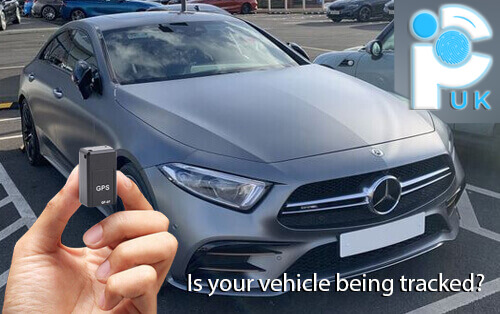
What if you suspect that someone, perhaps not a PI but an estranged partner or stalker, has fitted a tracking device to your vehicle? Detecting a hidden GPS tracker on your car can be tricky, but there are some practical steps you can take.
- Do a physical inspection: With the engine off and the car safely parked, grab a torch and inspect the underside of your vehicle. Most trackers are attached with strong magnets to the metal chassis, frame, or other metal surfaces under the car. Common hiding spots include inside wheel arches, on the underside of bumpers, behind the vehicle’s number plate, or tucked up near the exhaust and suspension components. If you see any small box or device that is not normally part of the car, it could be a tracker.
- Check inside and around the cabin: Some GPS trackers can be hidden inside the car’s interior as well. For instance, there are trackers disguised as USB charging adapters or OBD port dongles. Examine the dashboard, under seats, inside the glove box, boot, and any accessory plugged into power sockets. If someone had prolonged access to your car’s interior, they might have hidden a device inside.
- Use an electronic detector: There are handheld bug detector devices available that can help detect transmitting signals. These can sometimes pick up the radio frequency or mobile signals emitted by a GPS tracker when it sends data. However, be aware that not all trackers transmit constantly; some may send bursts of data intermittently to save battery, so a detector is not foolproof. AirTags use Bluetooth signals, which some RF detectors can also scan for.
- Seek professional help: If you are not confident or have not found anything but still suspect a tracker, consider hiring a professional for a thorough sweep. Our private investigators offer vehicle bug sweep services, using advanced equipment and extensive knowledge of where devices can be concealed. An expert knows exactly where to look and how to identify even well-hidden tracking devices or listening devices, providing you with peace of mind.
Remember to stay safe while searching. If you do find a suspicious device, handle it carefully. You may want to preserve it as evidence by photographing it in place before removal. Alerting law enforcement is wise if you believe you are being stalked or harassed via an illicit tracker.
How Do You Know if Someone Is Following You with an AirTag?
One of the few upsides of Apple’s AirTag, if it is used maliciously, is that it will try to warn the potential victim. Apple built in safety features to combat AirTag stalking. Here is how it works.
If you have an iPhone, your device is constantly on the lookout for any AirTag that is not yours but seems to be travelling with you. Within a few hours of an unknown AirTag moving with you, your iPhone will display a notification saying something like “AirTag Detected Near You” or “Unknown Accessory Detected”. You can tap the alert for more information. It may display the AirTag’s serial number and offer an option to make it play a sound, helping you locate it.
For Android users, Apple provides the Tracker Detect app which you can install to scan for AirTags. Google has also started rolling out built-in AirTag detection alerts on newer Android phones via Google Play services, meaning many Android devices will automatically warn you if an AirTag is moving with you. Below is an example of what an AirTag alert looks like on an Android device:
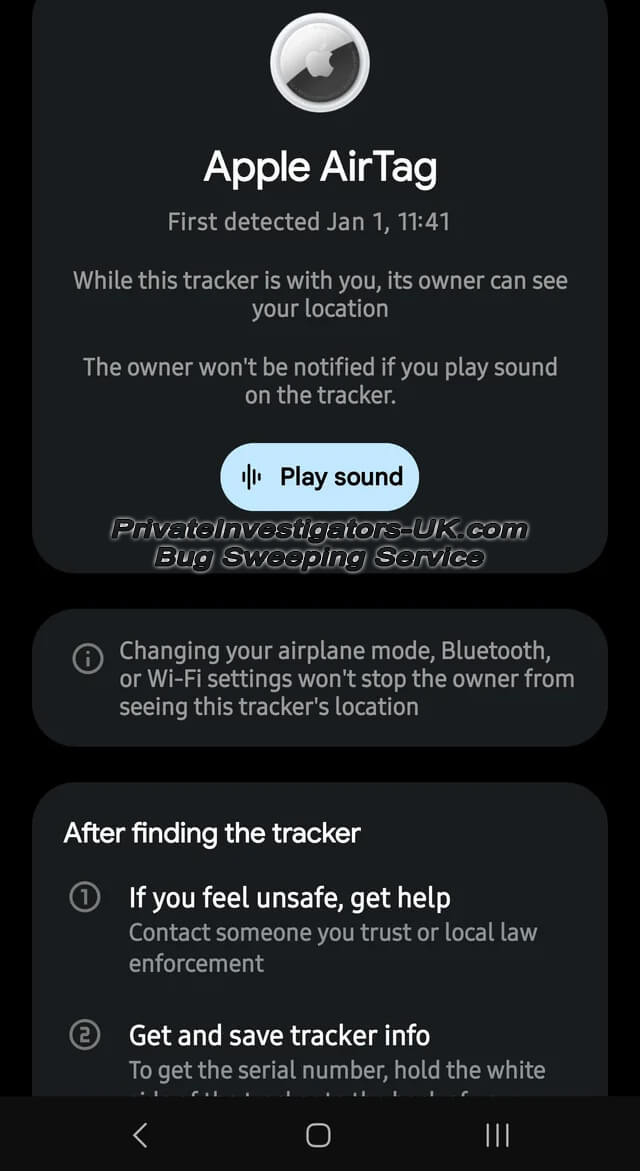
If you receive an alert like this, it means an AirTag or similar device has been detected nearby and is moving with you. Follow the instructions on your phone. It will typically guide you to find the AirTag and disable it. An AirTag can be disabled by twisting it open and removing its battery. You might also want to hold your phone next to the AirTag to read its NFC information. Apple can work with law enforcement in serious cases to trace an AirTag back to its registered owner.
It is worth reiterating that if someone is tech-savvy and malicious enough to track you, they might not use an AirTag at all. As noted earlier, there are many GPS trackers that will never notify the target. Those devices are more dangerous from a privacy standpoint because you will not know they are there without a physical or electronic sweep. This is why staying vigilant and periodically checking for signs of trackers is important if you have reason to believe you are being monitored. If in doubt, calling in professionals to conduct a sweep can give you peace of mind.
Is It Legal to Track Someone in the UK?
The legality of tracking someone with a GPS device in the UK depends heavily on the circumstances and intent. It is not outright illegal to fit a tracker to a car. For example, if you own the vehicle or have the owner’s consent, using a tracker can be lawful. Many spouses have legally asked private investigators to put a tracker on a family car they personally own, in order to document a partner’s movements in an infidelity investigation. This can fall within the law as there is a legitimate reason and no breach of the peace.
On the other hand, secretly tracking someone without any justifiable reason can violate privacy and harassment laws. Stalking an individual with a device, especially if you have no right to monitor them, is likely illegal and can lead to criminal charges. Private investigators must also follow legal guidelines. For instance, we cannot trespass on purely private land to plant a tracker. If a vehicle is accessible in a public area, such as parked on a public street, a professional investigator can covertly attach a tracker without it being considered trespass. All data gathered must be handled in compliance with privacy regulations.
If you are considering using a GPS tracker yourself, it is wise to consult the law or speak to an expert because each situation can differ. We cover these nuances in our GPS Tracker FAQ: Is it legal to fit GPS trackers in the UK? blog post. In general, if you have a legitimate reason, such as protecting your property or investigating a spouse’s honesty, and you own the asset being tracked, you are on firmer legal ground. Tracking someone purely out of curiosity or jealousy when you have no rights to their information is likely to cause legal problems.
Bottom line: Private investigators can and do use GPS trackers legally as part of their toolkit, but they operate within the bounds of UK law and ethical practice. AirTags, however, are not part of that toolkit because of their limitations and anti-stalking features. If you need vehicle tracking done properly, or suspect someone has tracked you, it is best to engage with professionals. Our team is experienced in both deploying GPS trackers for legitimate investigations and detecting or removing unauthorised trackers through comprehensive bug sweeps.
If you have any concerns about tracking devices or want to discuss an investigation, feel free to contact us for a free, confidential quote. We are experienced in fitting GPS trackers, installing them as part of surveillance operations, and checking vehicles and properties for hidden devices. Your safety and peace of mind are our priority.

You are reading the PrivateInvestigators-UK blog — home to the UK's leading detective agency. Learn more about us by visiting our homepage PrivateInvestigators-UK.com.